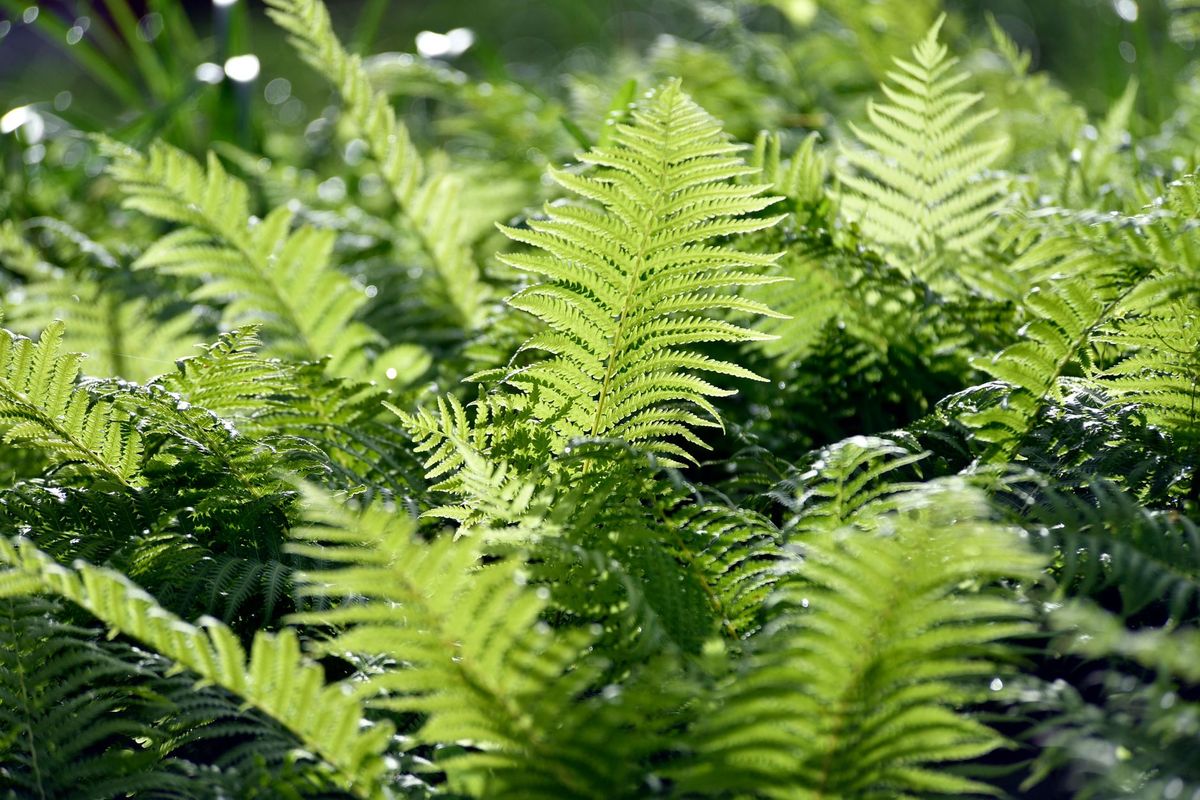
There are few sadder sights in a February garden than a fern you cosseted all summer reduced to a brown heap. The annoying part is that the same species can sail through winter in one garden and die in the next street. For ferns, hardiness is rarely a simple yes or no.
Ferns are ancient plants with a straightforward survival strategy: keep the growing point alive and everything else can be replaced. Get the crown through the cold and wet, and the fronds will follow. This guide explains what frost tolerance really means in a British garden, how to find or create a microclimate, and which ferns are better off under glass.
What "hardy" really means for a fern
The RHS hardiness ratings run from H1, for plants needing a heated glasshouse all year, up to H7, for plants that will take severe frost. Plenty of garden-centre ferns are sold with no rating at all, so it pays to know the genus you are buying.
Ferns also differ from shrubs in where the danger lies. A shrub can lose its leaves and reshoot from old wood. A fern has one or more crowns – tight buds of undeveloped fronds sitting at or just below soil level. If that crown freezes solid, or sits in waterlogged soil and rots, the plant is finished. Frond damage is cosmetic. Crown damage is fatal.
In most of the UK, cold alone is not the killer. Wet cold is. A Dryopteris in sharply drained soil under a hedge will shrug off a fortnight of hard frost; the same fern in heavy clay on an exposed slope can rot at two degrees above freezing. Wind matters as well, because it strips moisture from evergreen fronds and dries crowns faster than still air does. A newly planted fern is also far more vulnerable than one that has been in the ground two or three seasons, which is why spring planting is always the safer bet.
The reliably hardy ferns
These will take a normal British winter outdoors with little or no fuss:
- Dryopteris filix-mas and its many selections – deciduous, tolerant of dry shade, almost indestructible once established.
- Polystichum setiferum, P. aculeatum and P. munitum – evergreen shields that hold their fronds through the worst of the weather.
- Asplenium scolopendrium (hart's tongue) – evergreen, happiest in shade, and one of the few ferns that actively likes lime.
- Athyrium filix-femina and A. niponicum var. pictum – soft, lacy and deciduous, but quick to re-emerge in spring.
- Matteuccia struthiopteris – the shuttlecock fern, superb in damp soil, spreads steadily by runners.
- Polypodium vulgare – a native that will grow on a shaded wall or in a tree fork, and copes with drought better than most.
- Blechnum spicant – the hard fern, for acid soil, with neat evergreen rosettes.
Build a border around these and you can forget winter entirely, apart from a mulch of leafmould in autumn and a tidy-up of dead fronds in March.
Where tenderness begins
At the other end sit the ferns sold as houseplants and conservatory specimens. Boston fern (Nephrolepis exaltata), the maidenhairs such as Adiantum raddianum, most Pteris, staghorn fern (Platycerium) and the tropical tree ferns including Cyathea and Alsophila will not survive a frost, and some will be damaged by temperatures close to it.
Half-hardy is the broad middle ground. Dicksonia antarctica is the classic example: far tougher than its tropical looks suggest, and capable of living outdoors for years in mild, sheltered or coastal gardens. But the crown needs protection, and a small potted plant is far more vulnerable than a thick-trunked specimen that has been in the ground for a decade. In cold inland gardens, treat it as a plant that needs real winter help rather than a hardy fern.
Microclimates: how to borrow a few degrees
Cold air behaves a little like water. It flows downhill, pools in hollows and is blocked by solid objects, which means every garden contains spots that are effectively a zone milder than the rest.
A south- or west-facing wall absorbs heat during the day and releases it overnight. A deciduous canopy overhead traps rising warmth and keeps frost off the ground beneath. Ground that slopes away sheds cold air rather than collecting it, while the bottom of a slope, a sunken patio or the far side of a solid fence can be a frost pocket. Town gardens generally run warmer than exposed rural ones. None of this changes the air temperature by much, but a couple of degrees is often the difference between a living crown and a dead one.
Drainage is the other half of the equation. Even a hardy fern will struggle in a hollow where water stands all winter. Plant on a slight mound, work in grit and compost, and never let mulch pile up against the crown.
Winter protection that actually works
- Sort out drainage first. Protection is useless if the crown is sitting in a puddle.
- Mulch with dry material. Leafmould, bracken or dry straw around – never on top of – the crown. Wet mulch pressed into the growing point invites rot.
- Cut deciduous ferns back after the first hard frost, then mulch the bare crown.
- Leave evergreen fronds alone until March. They shelter the crown, even when they look tatty.
- Wrap tree fern trunks in fleece or hessian and pack the crown with straw, keeping the growing point dry. A piece of fleece over the top sheds rain.
- Move pots under cover, against a house wall or into a cold porch, and stand them on feet so they drain freely. Roots in pots freeze far faster than roots in soil.
- Ease off watering for potted ferns over winter, but do not let them dry out completely.
Protect the crown rather than the fronds, and most ferns will look after themselves.
Under glass and indoors
Tender ferns want light, humidity and cool air. A frost-free conservatory, glazed porch or cool greenhouse suits them far better than a warm living room. Keep them away from radiators and woodburners, group pots together to raise humidity, and stand them on a tray of damp gravel. Water sparingly through winter and stop feeding altogether; growth is slow and soggy compost is the usual cause of winter losses.
For true tropicals, aim for a minimum somewhere around 10°C, and ventilate on mild days to keep mould and botrytis at bay. Check the undersides of fronds for scale insect and the leaf joints for mealybug while plants are indoors and easy to inspect.
A simple way to decide
Before you buy, ask three questions. Is the crown sitting at soil level, where frost and water can reach it, or is it raised? Does the label give a hardiness rating at all? And where in your garden would it actually go – a sheltered wall, or an exposed bed by the gate?
If the fern is hardy to H5 or above and you can offer decent drainage and some shelter, plant it out in spring and mulch it in autumn. If it is half-hardy, plant it in a pot so you can move it under cover, or accept that it will need wrapping and a straw-packed crown each winter. If it is tender, keep it in a pot and treat it as a conservatory plant – it will reward you with fronds right through the coldest months while everything outside is dormant.
Photo: Peter Dyllong / Pexels